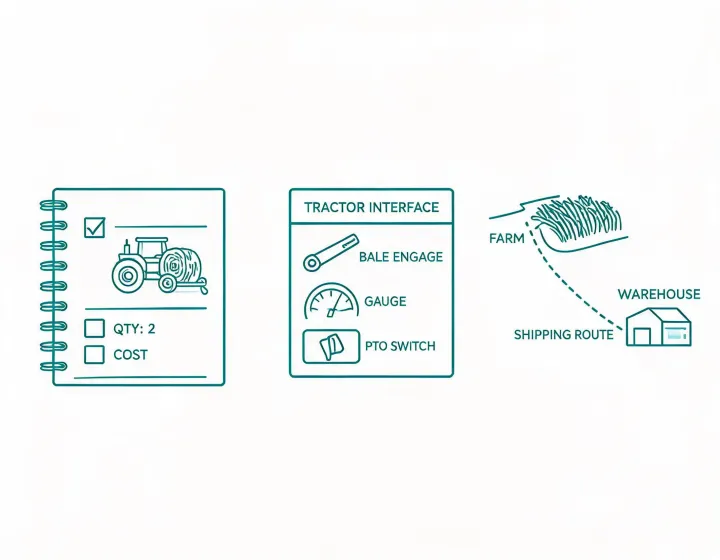
One written scope, fewer assumptions
Begin with the baler type and crop. Include site size, windrow conditions, target bale dimensions, moisture or handling target, working width or capacity, and the desired unit count. Explain how you will move and store the bales; a machine that fits the tractor can still produce a bale the operation cannot handle.
List available PTO horsepower separately from engine power, then the PTO speed, shaft connection, three-point hitch or drawbar arrangement, hydraulic outlets and controls. Ask the factory to confirm compatibility in writing. Include spare parts, installation or commissioning expectations and operating-document language.
A target budget is optional. State the amount or range, currency and whether it covers a unit or the whole order, including any transport or support allowance. Supplier preferences describe a buyer's trade-offs between configuration, cost and service; they are not verified supplier ratings, and you do not need an existing quote.
Factory replies must confirm MOQ, availability, documents and lead-time basis. Review the comparison method if you are collecting competing proposals, or return to the baler options to select a starting point. Rural Link Sourcing acts as an independent sourcing partner; the manufacturer remains responsible for its proposed specifications and commitments.